

Product Introduction
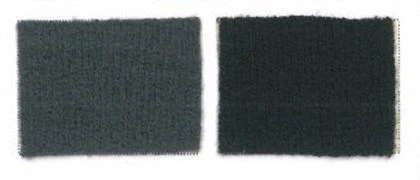
Acid black ACE is a water soluble dye with the appearance of black powder. It dissolves in water. The water solution shows black color.
Mainly used in the dyeing of wool, silk and nylon/polyamide. And can also be used in the dyeing of leather.
pH 4.0-5.0 recommended for the dyeing of wool; pH 4.0-5.0 recommended for the dyeing of nylon/polyamide.
Physical and Chemical Parameters
|
Appearance |
Black Powder |
|
pH Value (1% Water Solution) |
6.00-8.00 |
|
Strength |
98%-101% |
|
Color Difference CMC (2:1) |
≤0.50 |
|
Moisture |
≤8.00% |
|
Insoluble |
≤0.200% |
|
Solubility (90℃) |
≥60g/l |
|
Degree of Fineness (200um) |
≤8 |
|
Dust-Proof Performance |
≥2 |
Fastness Properties (Polyamide)
|
DYEING DEPTH (O.W.F) |
LIGHT (XENON) |
WASHING (50℃) |
PERSPIRATION (ALKALI) |
RUBBING |
WATER |
|
4% |
1/1 |
CH PA CO |
CH PA CO |
(DRY) (WET) |
CH PA CO |
|
4-5 |
4-5 4-5 5 |
4-5 4-5 5 |
4-5 4-5 |
4-5 4-5 5 |
FAQ
Q: What is an azo dye?
A: Azo dyes are a type of synthetic dyes containing azo groups (- N=N -). In the molecular structures of azo dyes, aromatic groups are connected at the two ends of the azo group. Azo dyes have several types like monoazo, diazo and polyazo. Azo dyes are widely used in the dyeing and printing in textile, plastic, leather and other fields. Now more and more azo dyes are banned in the textile industry. These azo dyes release potentially carcinogenic aromatic amines.
Q: How do acid dyes work?
A: Most acid dyes are in the form of aromatic sodium sulfonates which are ionized and bound with amino or amide groups in fibers to set the colors.
Q: Are acid dyes positive or negative?
A: Acid dyes contain negatively charged groups, such as sulphonic or carboxyl groups.
Q: How are acid dyes made?
A: Most of acid dyes are synthesized from chemical reactions. Azo compounds, anthraquinone or triarylmethane structures' materials are used and combined with water-soluble groups such as sulfonic acid groups and carboxyl groups. Usually condensation, salt precipitation and other steps are involved in forming the finished products.
Q: Are acid dyes toxic?
A: Acid dyes are not toxic although they are called acid dyes. Acid dyes seem to be caustic when you look at the word "acid", but actually they are quite safe.
Q: How to use acid dyes?
A: The majority of acid dyes are in the form of aromatic sodium sulfonates which are ionized and bound with amino or amide groups in fibers to set the colors. Acid dyes are suitable for protein fibers such as wool, silk, as well as polyamide synthetic fibers. The acidic media are always used in the dyeing process. According to dyeing performance, acid dyes fall into three dyeing types: strong acid bath, weak acid bath and neutral bath.
Strong acid bath dyes have simple molecular structures with a high proportion of sulfonic acid groups. The fibers are bound by ionic bonds. They exist in the form of anions in the dye bath. Why are they called strong acid dyes? Since the fibers should be dyed in a strong acidic dye bath. This kind of dyes have good levelling performance and bright shade, hence they are also called levelling acid dyes.
Weak acid bath dyes have more complicated molecular structures with a lower proportion of sulfonic groups. The fibers are dyed in a weak acidic dye bath. Normally the wet fastness of weak acid bath dyes is higher than that of strong acid bath dyes, but the levelling performance is not good as that of strong acid batch dyes.
Neutral bath dyes have smaller proportion of sulfonic acid groups in the molecular structures and the fibers are dyed in neutral baths.
Q: Are acid dyes natural?
A: Acid dyes are not natural. Acid dyes are synthesized from chemical reactions. But people could find some natural colors to dye the fibers.
Hot Tags: acid black ace, China acid black ace manufacturers, suppliers, factory, Acid Blue 127 1, Acid Orange 3, Acid Orange 56, Acid Red 266, Acid Red 299, Acid Yellow 59


